

Ai Agents Vs Traditional Ai Key Differences And Use Cases While ai agents and traditional ai both harness human like intelligence, they vastly differ in their features and use cases. this article will give you a detailed comparative analysis of ai agents vs traditional ai, as both have specific approaches to autonomy and decision making. Explore how agentic ai differs from traditional ai in 2025. understand key differences, use cases, risks & enterprise value.

Agentic Ai Vs Traditional Ai What Sets Them Apart Agentic ai and traditional ai represent two different approaches used to build intelligent systems. although often mentioned together, they are based on different principles and provide distinct capabilities. let's see the key differences between them:. Discover the distinctions between agentic ai and traditional ai. learn key gaps, use cases, and identify your role in the adoption journey and migration strategy. Agentic ai vs traditional ai architectures explained—discover how agentic architecture differs from traditional ai architectures in autonomy, decision making, adaptability, and real world scalability. Discover how agentic ai differs from traditional ai in autonomy, decision making, & applications. compare capabilities, use cases, & implementation strategies.

Agentic Ai Vs Traditional Ai What Sets Them Apart Agentic ai vs traditional ai architectures explained—discover how agentic architecture differs from traditional ai architectures in autonomy, decision making, adaptability, and real world scalability. Discover how agentic ai differs from traditional ai in autonomy, decision making, & applications. compare capabilities, use cases, & implementation strategies. Traditional ai tools react to user commands, while ai agents act independently using machine learning and natural language processing to manage workflows, predict risks, and adapt in real. An ai agent differs from traditional applications in computer programming in several key ways, primarily in terms of functionality, adaptability, decision making, and the underlying. In this blog, we'll explore the key differences between traditional ai models (llms) and ai agents (agentic ai) to understand where the future of ai is heading. With more companies looking to automate their workflows, the distinction between agentic vs traditional ai systems is becoming increasingly important. understanding what sets agentic ai apart– and why that difference matters– is vital for organizations aiming to stay competitive in their market.
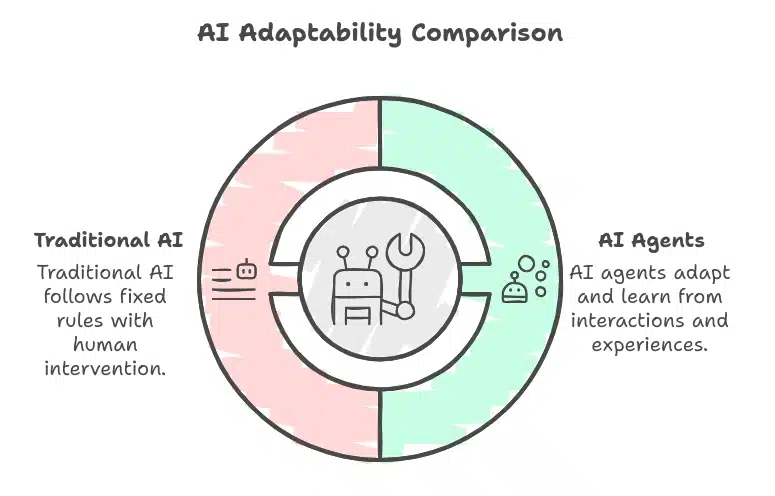
Key Differences And Use Cases â Meta Ai Labsâ Traditional ai tools react to user commands, while ai agents act independently using machine learning and natural language processing to manage workflows, predict risks, and adapt in real. An ai agent differs from traditional applications in computer programming in several key ways, primarily in terms of functionality, adaptability, decision making, and the underlying. In this blog, we'll explore the key differences between traditional ai models (llms) and ai agents (agentic ai) to understand where the future of ai is heading. With more companies looking to automate their workflows, the distinction between agentic vs traditional ai systems is becoming increasingly important. understanding what sets agentic ai apart– and why that difference matters– is vital for organizations aiming to stay competitive in their market.
Comments are closed.