
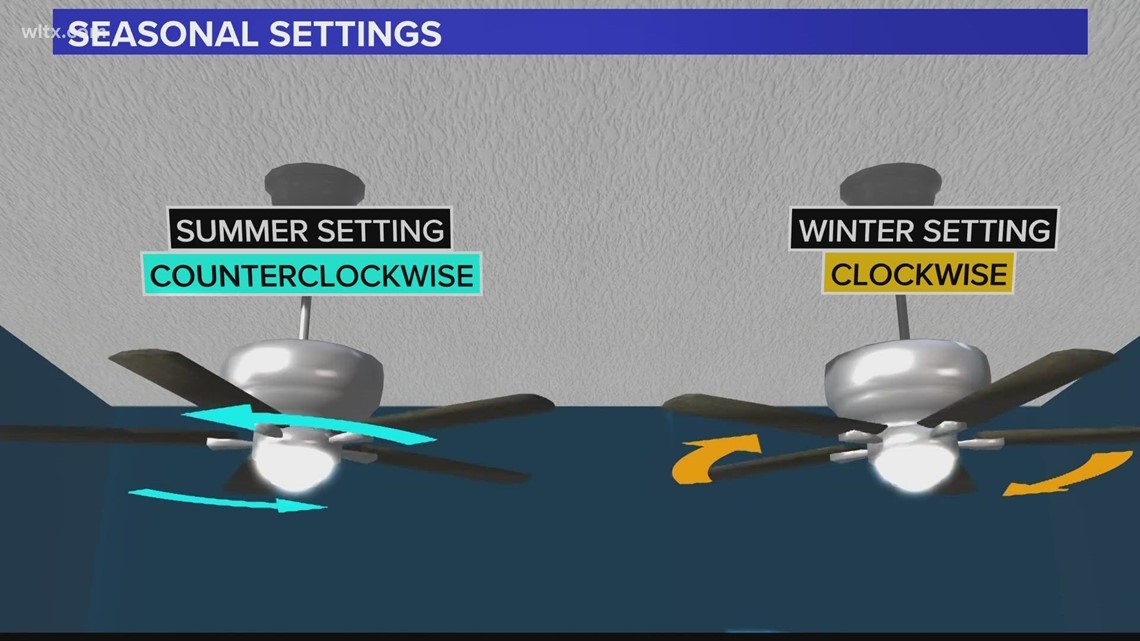
Here S Why And When You Should Change Your Ceiling Fan Direction Wltx During the hot summer months, ceiling fans should spin counterclockwise. this creates a downdraft, pushing the air downward so you feel cooler. but as fall arrives and you turn the heat back. Changing the direction of your ceiling fan will not affect the temperature of the room, but it will affect the airflow. by setting your ceiling fan to the correct direction, you can cut your energy costs and keep your home comfortable at the same time.
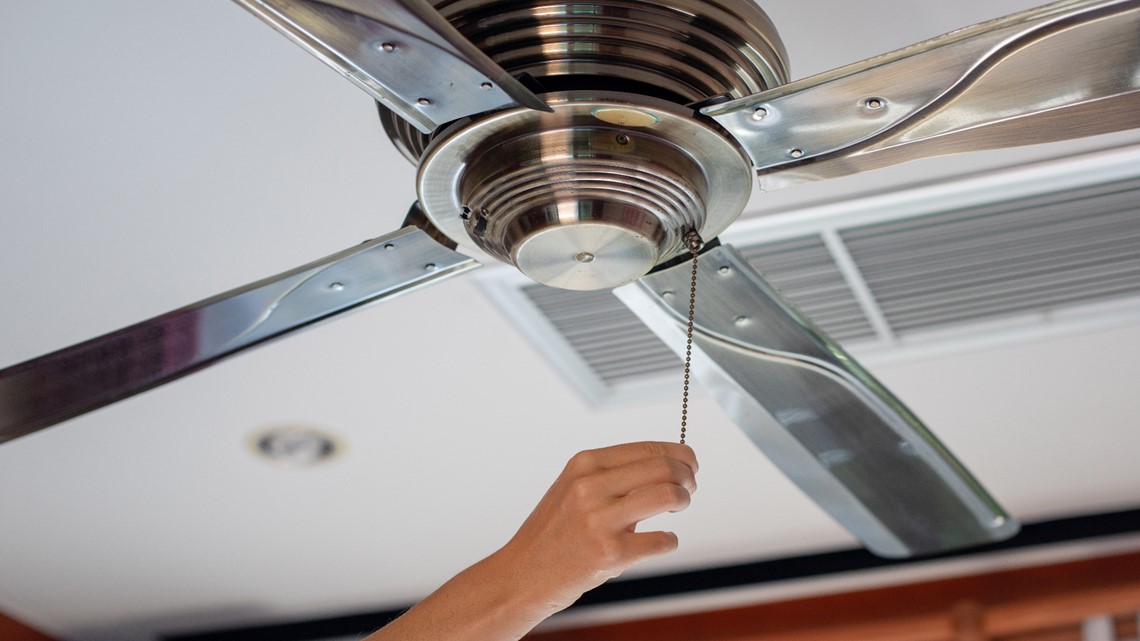
Here S When And Why You Should Change Your Ceiling Fan Direction Wltx During the warmer months of spring and summer, your fan should turn counterclockwise. this causes the fan blades to push cool air downward, making it feel cooler in the room. after setting your summer direction, you should set the ceiling fan speed to medium or high to create a wind chill effect. Adjusting your ceiling fan direction in summer and winter can cut energy costs and save you money. our guide covers the different directions your fan should be set during warm or cold months. Follow our simple steps for changing a fan's direction and read on to see which way to turn it and when, plus general tips for running your fan. it's best to change your ceiling fan's direction two to three times a year. you will want to change it according to the season and weather. In the summer, the ceiling fan direction should be counterclockwise. the downward breeze, generated by counterclockwise fan spin direction, will make us feel cooler. we won’t have to push the air conditioner so hard. in the winter, the ceiling fan direction should be clockwise.
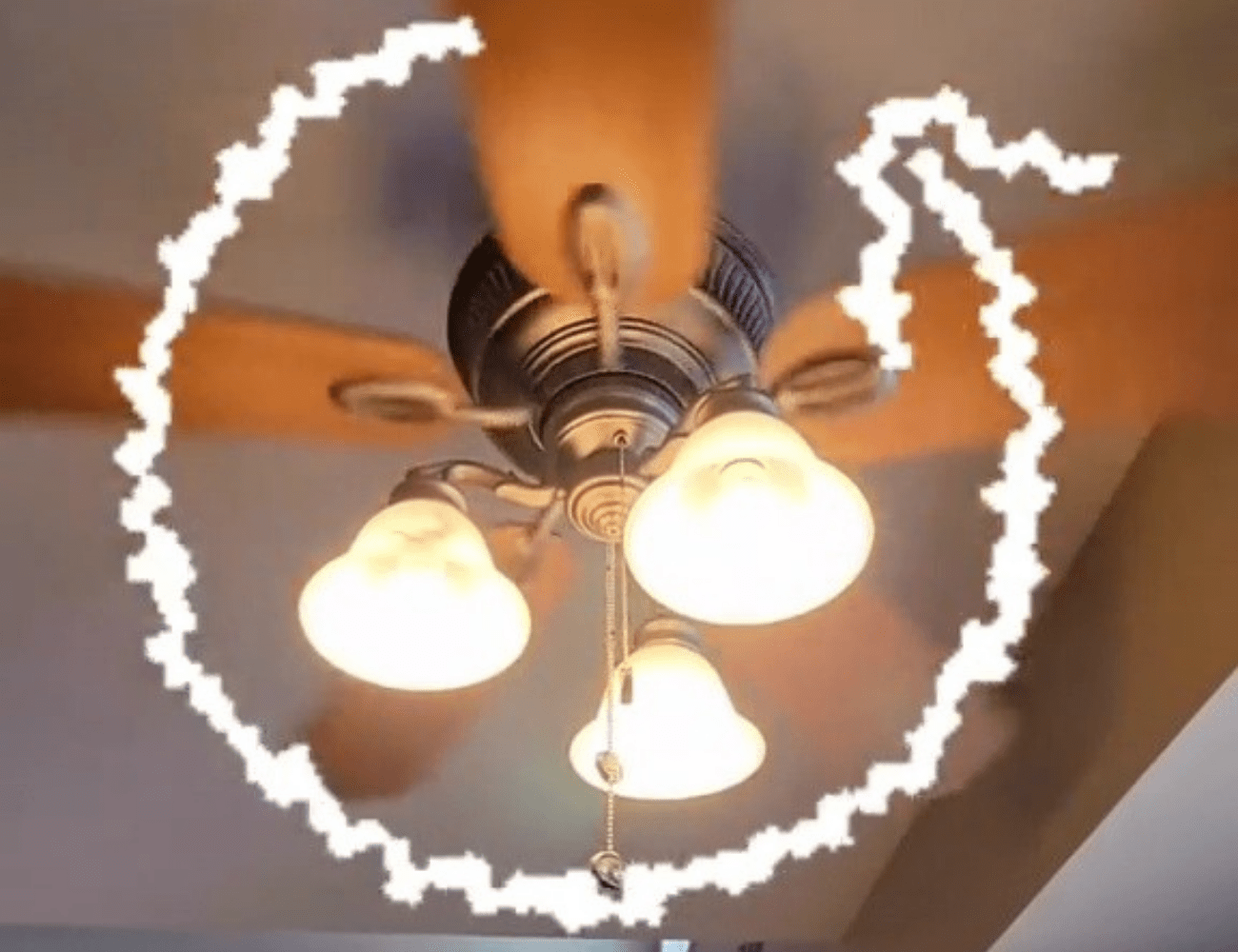
Why Change Your Ceiling Fan Direction The Daily Diy Follow our simple steps for changing a fan's direction and read on to see which way to turn it and when, plus general tips for running your fan. it's best to change your ceiling fan's direction two to three times a year. you will want to change it according to the season and weather. In the summer, the ceiling fan direction should be counterclockwise. the downward breeze, generated by counterclockwise fan spin direction, will make us feel cooler. we won’t have to push the air conditioner so hard. in the winter, the ceiling fan direction should be clockwise. Did you know your ceiling fan can spin in two different directions? this quick reference guide shows you why and how to change your ceiling fan direction. To keep your home cool (and comfortably warm in the winter), learn how to change your ceiling fan direction for summer and winter. how your ceiling fan blades rotate determines how air circulates in the room. as warm air naturally rises, cool air settles near the floor. This is your one stop guide for setting ceiling fan direction for cooling in the summer and heating in the winter months. we'll make it easy. Did you know you should change your ceiling fan's direction in the summer and winter? depending on the season, you'll want the fan to rotate counterclockwise or clockwise. by changing your ceiling fan direction, you may feel warmer or colder in the room. though ceiling fans don't technically warm or cool a room, they provide air circulation to create a warm or cool breeze that flows over your.
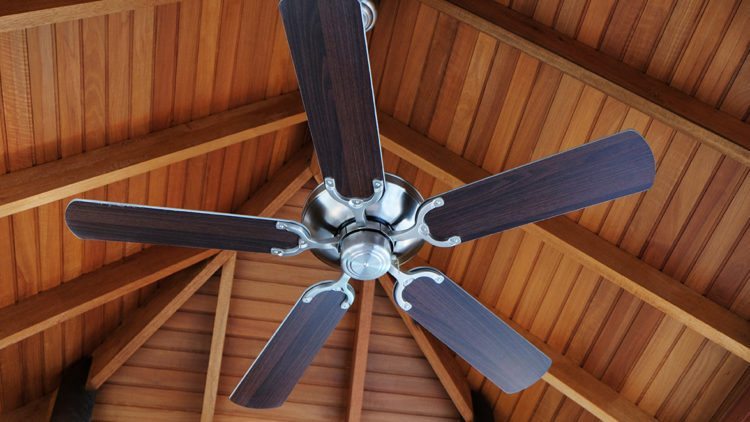
Change The Direction Of Your Ceiling Fan Columbia Hvac Portland Or Did you know your ceiling fan can spin in two different directions? this quick reference guide shows you why and how to change your ceiling fan direction. To keep your home cool (and comfortably warm in the winter), learn how to change your ceiling fan direction for summer and winter. how your ceiling fan blades rotate determines how air circulates in the room. as warm air naturally rises, cool air settles near the floor. This is your one stop guide for setting ceiling fan direction for cooling in the summer and heating in the winter months. we'll make it easy. Did you know you should change your ceiling fan's direction in the summer and winter? depending on the season, you'll want the fan to rotate counterclockwise or clockwise. by changing your ceiling fan direction, you may feel warmer or colder in the room. though ceiling fans don't technically warm or cool a room, they provide air circulation to create a warm or cool breeze that flows over your.
Comments are closed.