
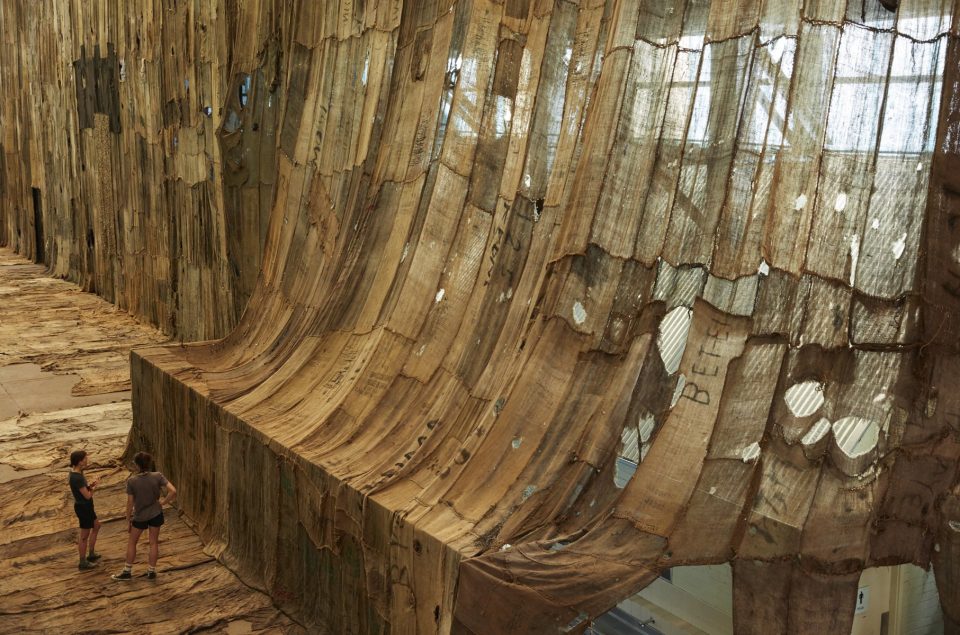
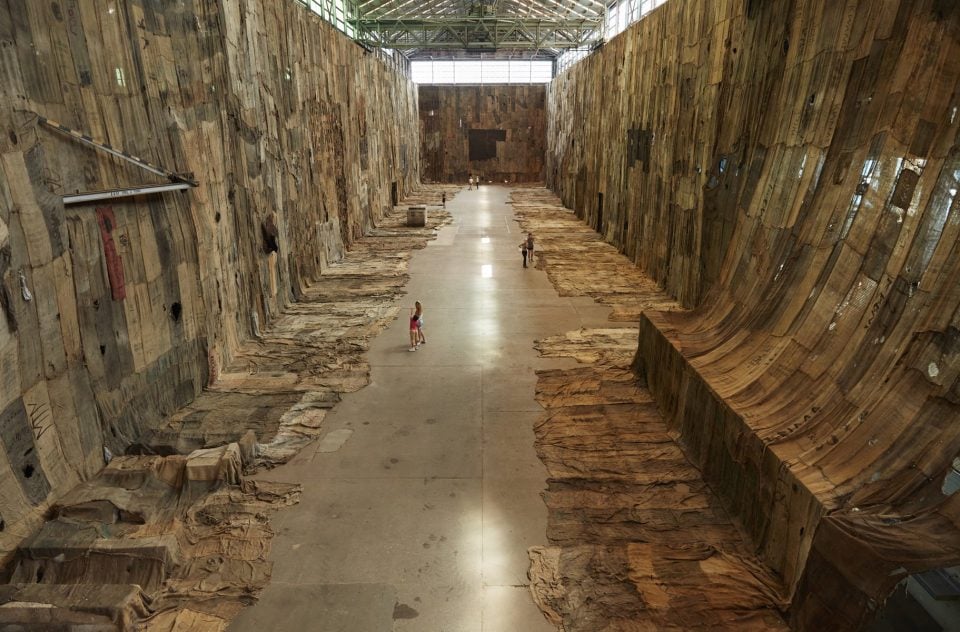
Ibrahim Mahama Biennale Of Sydney For the 22nd biennale of sydney, artist ibrahim mahama presents multiple works including a large scale installation inside the turbine hall at cockatoo island, sydney. Presented at the 22nd biennale of sydney with generous support from andrew cameron am and cathy cameron; anonymous; and assistance from white cube. courtesy the artist and white cube, london hong kong.

Ibrahim Mahama Biennale Of Sydney Ibrahim mahama is known for his large scale installations made from jute sacks previously used to transport cocoa beans and charcoal, which are emblematic of ghana’s commodity dependency. his work explores themes of commodity, migration, globalization, and economic exchange. Best known for large scale burlap sack installations, ibrahim mahama is helping shift power in the art world to the global south while redefining art as a collective practice. Find an in depth biography, exhibitions, original artworks for sale, the latest news, and sold auction prices. see available paintings, sculpture, and installation for sale and learn about the artist. Comprising exhibition spaces, research facilities and an artist residency centre, both sites represent mahama’s contribution to developing and expanding the contemporary art scene in his country.
Ibrahim Mahama Biennale Of Sydney Find an in depth biography, exhibitions, original artworks for sale, the latest news, and sold auction prices. see available paintings, sculpture, and installation for sale and learn about the artist. Comprising exhibition spaces, research facilities and an artist residency centre, both sites represent mahama’s contribution to developing and expanding the contemporary art scene in his country. Through the consortium, mahama is deploying art practice to fuse social and cultural transformation in the local area. the bats of nkrumah volini – a symbol of death and rebirth – were the inspiration for lazarus (2021), a grouping of suspended forms constructed from armatures of metal rebar. He is represented by the influential apalazzo gallery and white cube galleries and his practice includes using old hospital beds, discarded train carriages and other artefacts that he turns into. Mahama and his collaborators obtain these items through a process of negotiation and exchange. gathered together in single, monumental units, the material cum works are re purposed and become part of mahama’s ongoing inquiry into their life and their dynamic potential. Mahama’s interest in material, process and audience artist blankets the exterior architecture of public first led him to focus on jute sacks that are synonymous buildings.
Comments are closed.