

Python Print Function How To Flush Output Since python 3.3, you can force the normal print() function to flush without the need to use sys.stdout.flush(); just set the "flush" keyword argument to true. from the documentation:. In this tutorial, you'll learn how to flush the output of python's print function. you'll explore output stream buffering in python using code examples and learn that output streams are block buffered by default, and that print () with its default arguments executes line buffered when interactive.
Python Print Function How To Flush Output Learn how to force python's print function to display output immediately with this comprehensive guide on flushing the print buffer. This tutorial explains how to flush print output in python, ensuring immediate visibility of your print statements. learn about the flush parameter, sys.stdout.flush (), and context managers to control output effectively. To use the flush parameter, simply include flush=true in your print function: this will print the string "hello, stackabuse!" and immediately clear the output buffer. let's look at a few examples of how the flush parameter can be used in real world scenarios. By default, the print () function buffers the output, meaning that it may not be immediately displayed on the screen or written to a file. however, you can force the output to be flushed immediately by setting the flush parameter to true.
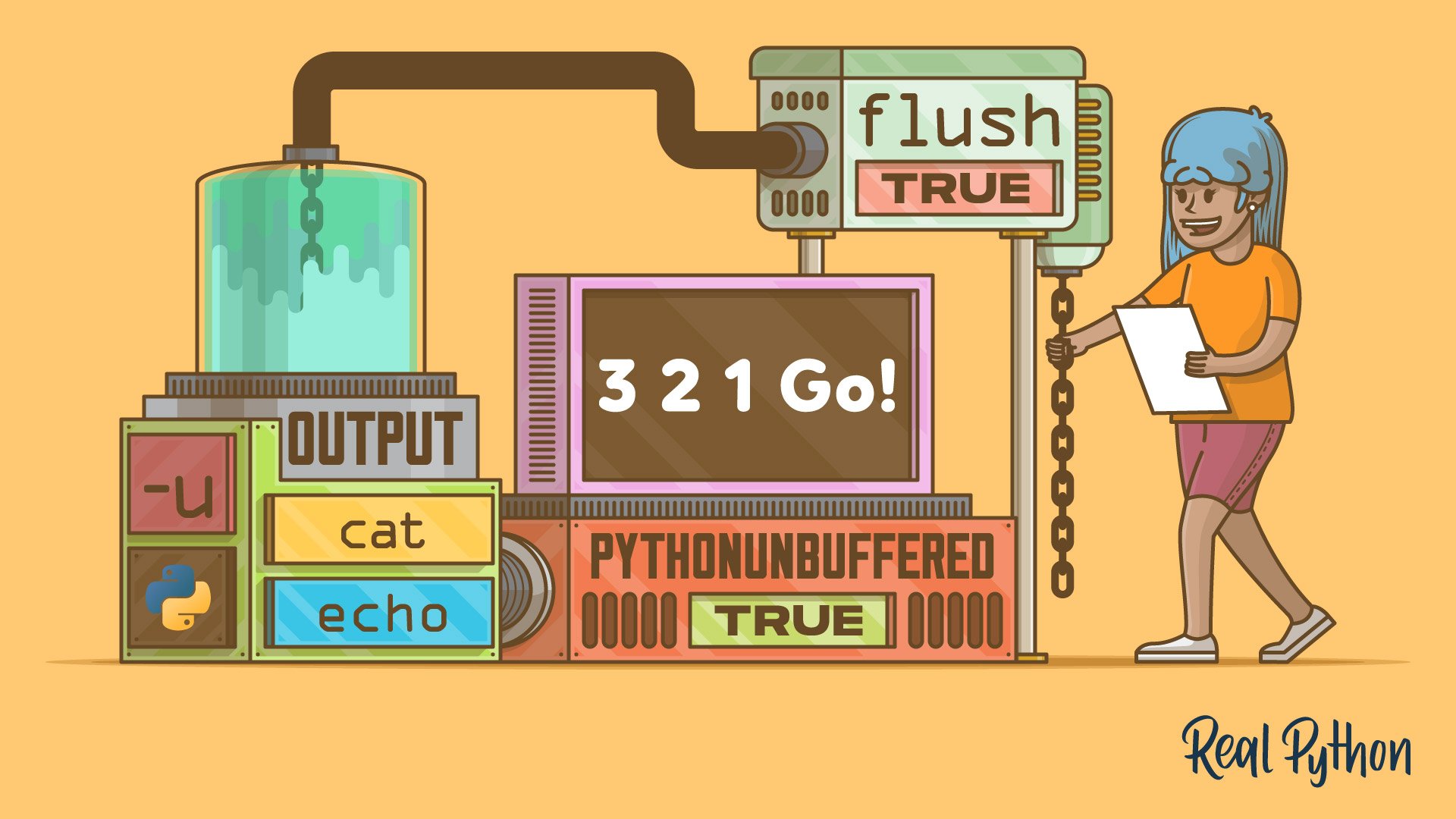
Python Print Function How To Flush Output To use the flush parameter, simply include flush=true in your print function: this will print the string "hello, stackabuse!" and immediately clear the output buffer. let's look at a few examples of how the flush parameter can be used in real world scenarios. By default, the print () function buffers the output, meaning that it may not be immediately displayed on the screen or written to a file. however, you can force the output to be flushed immediately by setting the flush parameter to true. The flush parameter in the print function allows you to override this buffering behavior. when flush=true is specified, the buffer is immediately emptied, and the data is sent to the output destination right away. In particular, in situations where real time performance is required, this behavior can sometimes cause unexpected troubles. one way to solve such problems is to utilize the flush argument in the print function. by specifying flush=true, you can immediately reflect the output to the screen or file. The sys module provides functions and variables used to manipulate different parts of the python runtime environment. it lets us access system specific parameters and functions. another way of achieving the same functionality as above is setting the flush parameter of the print statement to true. Ever run a python script that seems to delay printing output until the end? or tried to create a progress indicator that just doesn’t update properly? the print function’s `flush`.

Python Print Function How To Flush Output The flush parameter in the print function allows you to override this buffering behavior. when flush=true is specified, the buffer is immediately emptied, and the data is sent to the output destination right away. In particular, in situations where real time performance is required, this behavior can sometimes cause unexpected troubles. one way to solve such problems is to utilize the flush argument in the print function. by specifying flush=true, you can immediately reflect the output to the screen or file. The sys module provides functions and variables used to manipulate different parts of the python runtime environment. it lets us access system specific parameters and functions. another way of achieving the same functionality as above is setting the flush parameter of the print statement to true. Ever run a python script that seems to delay printing output until the end? or tried to create a progress indicator that just doesn’t update properly? the print function’s `flush`.
Comments are closed.