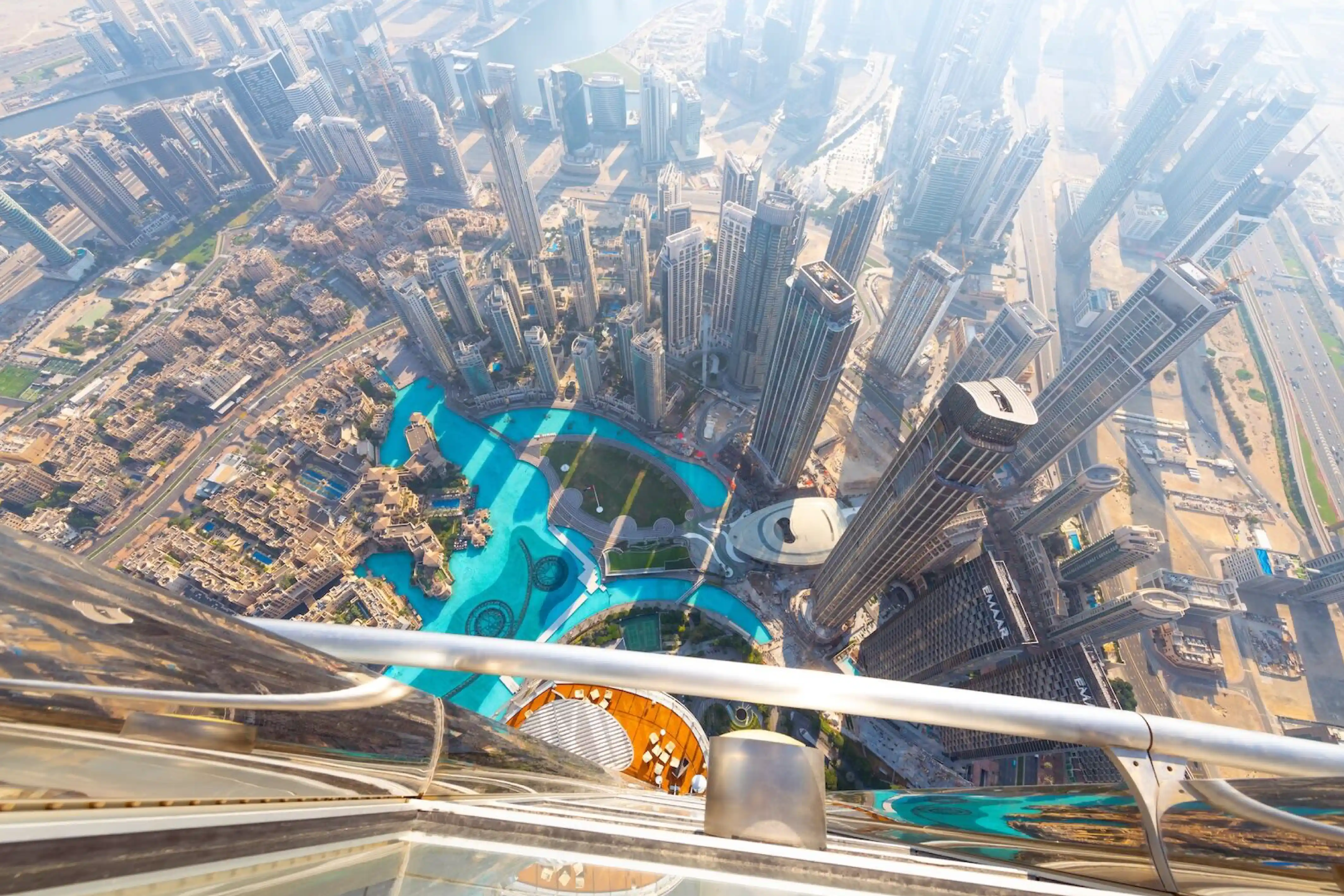
Standing at a staggering height of 828 meters, the Burj Khalifa is an engineering marvel that dominates the skyline of Dubai. Naturally, visitors ascending to its observation decks often wonder just how far their eyes can wander across the Persian Gulf. One of the most persistent rumors circulating among tourists and locals alike is: Can You See Iran from Burj Khalifa on a Clear Day? It is a fascinating question that blends geography, physics, atmospheric science, and a bit of local folklore.
To answer this question honestly, we have to look past the marketing hype and dive into the actual science of visibility. While the idea of catching a glimpse of a neighboring country across the sea sounds incredibly romantic, the reality is shaped by the Earth's curvature, humidity levels, and the sheer distance between Dubai and the Iranian coastline. In this comprehensive review, we will break down the facts, run the mathematical calculations, and give you the ultimate verdict on what you can actually see from the world's tallest building.
Before you book your tickets, understanding the atmospheric conditions of the Middle East is crucial. The Persian Gulf is notorious for its high humidity and dust particles, which create a persistent haze. However, there are rare moments when the air clears up completely, offering unprecedented views that stretch far beyond the city limits. Let us explore the framework that determines whether your eyes can bridge the gap between these two nations.
Introducing the V.I.E.W. Framework for High-Altitude Sightseeing
To systematically evaluate the possibility of spotting the Iranian coast from Dubai, we have developed the V.I.E.W. Framework. This framework breaks down the four critical pillars of long-distance visibility from extreme heights. By analyzing each pillar, we can separate urban legend from scientific reality.
The V.I.E.W. Framework consists of the following components:
- V - Visibility Limits: The maximum distance the human eye can see through the atmosphere under perfect conditions.
- I - Interference: The atmospheric obstacles, such as dust, humidity, and smog, that block long-range sightlines.
- E - Elevation Dynamics: The height of both the observer (Burj Khalifa) and the target (Iran's mountains) relative to the Earth's curve.
- W - Weather Windows: The specific meteorological events that create the rare, ultra-clear days required for extreme viewing.
Pillar 1: Visibility Limits and the Curvature of the Earth
The first obstacle to seeing Iran is the physical shape of our planet. Because the Earth is a sphere, the horizon curves away from us, eventually blocking objects that are too far away. The distance to the geometric horizon increases the higher you climb, which is why the Burj Khalifa offers such a massive advantage over ground-level viewing.
The Science of the Geometric Horizon
Under normal conditions, a person standing at sea level can only see about 4.8 kilometers (3 miles) before the Earth's curve hides the horizon. However, when you ascend to the observation decks of the Burj Khalifa, your horizon expands dramatically. According to standard geometric horizon calculations, the theoretical line of sight from the highest accessible point of the tower stretches over 100 kilometers.
To understand how this affects our quest to see Iran, we must consider these key factors:
- The distance from Dubai to the nearest point on the Iranian coast is approximately 153 kilometers (95 miles).
- The Earth's curvature acts as a physical barrier that requires immense height on both sides of the gulf to overcome.
- Atmospheric refraction can slightly bend light rays downward, effectively allowing you to see slightly beyond the geometric horizon.
- The human eye requires high contrast to distinguish distant landmasses from the surrounding sea and sky.
Pillar 2: Atmospheric Interference in the Persian Gulf
Even if the math says a sightline is theoretically possible, the atmosphere rarely plays along. The Persian Gulf is one of the most challenging environments in the world for long-distance visibility due to its unique climate and geography.
The Battle Against Haze and Humidity
Dubai experiences intense heat and humidity for most of the year. This moisture evaporates from the warm waters of the gulf, creating a thick layer of marine haze. Additionally, dust storms and fine desert sand suspended in the air act as a natural filter, scattering light and reducing contrast to almost zero at long distances.
The primary sources of atmospheric interference include:
- Suspended Dust Particles: Fine desert sand that remains airborne even on seemingly calm days.
- Marine Boundary Layer: A thick, humid layer of air directly above the sea that scatters light waves.
- Urban Smog: Air pollution from the bustling metropolitan areas of the United Arab Emirates.
- Thermal Turbulence: Heat rising from the desert floor that causes the air to shimmer, distorting distant images.
Pillar 3: Elevation Dynamics of the World's Tallest Tower
To overcome the Earth's curve, elevation is your best friend. The Burj Khalifa architecture facts reveal that the tower's height is specifically engineered to pierce through the lower atmospheric layers, placing observers high above the dense marine boundary layer.
Calculating the Combined Elevation Reach
To see an object across a vast distance, it is not just the height of the observer that matters; the height of the target is equally important. While the Iranian coastline itself is at sea level, the southern region of Iran is highly mountainous, featuring the rugged Zagros Mountain range.
To determine if these mountains are tall enough to peek over the horizon, we follow these steps:
- Identify the height of the observer at the Burj Khalifa's highest observation deck (At the Top, Sky at 555 meters).
- Calculate the distance to the horizon from this height, which is roughly 84 kilometers.
- Identify the height of the mountain peaks along the southern coast of Iran (some exceed 1,500 meters).
- Calculate the distance from those peaks to their own horizon.
- Add the two horizon distances together to find the maximum theoretical viewing range between the two points.
Pillar 4: Weather Windows and Optimal Meteorological Conditions
Because the standard atmospheric conditions in Dubai are hazy, spotting Iran requires a highly specific "weather window." These windows are rare and usually occur during the winter months when cold fronts sweep through the region.
The Perfect Storm for Crystal-Clear Views
The absolute best time to attempt this visual feat is immediately after a heavy rainstorm. Rain acts as a natural air purifier, washing away suspended dust, sand, and pollution. When combined with strong northwesterly winds (known locally as the Shamal), the humid marine air is pushed away, leaving behind an exceptionally dry, crisp atmosphere.
Look for these specific weather indicators before planning your visit:
- A sudden drop in humidity levels below 30%.
- Recent heavy rainfall over the Persian Gulf and Dubai.
- Strong winds that have cleared out the urban smog.
- Cooler winter temperatures, which reduce thermal turbulence.
The Mathematical Reality Check: A Worked Example
Let us put the physics to the test with a concrete mathematical example. We want to calculate whether a mountain peak in southern Iran, standing at 1,500 meters tall, is theoretically visible from the Burj Khalifa's observation deck at 555 meters, over a distance of 153 kilometers.
The formula for the distance to the horizon (accounting for standard atmospheric refraction) is:
Distance (km) ≈ 3.85 × √Height (meters)
Let us break down the calculation step-by-step:
- Observer Horizon (Burj Khalifa): 3.85 × √555 ≈ 3.85 × 23.55 ≈ 90.7 kilometers.
- Target Horizon (Iranian Mountain): 3.85 × √1500 ≈ 3.85 × 38.73 ≈ 149.1 kilometers.
- Maximum Theoretical Sightline: 90.7 km + 149.1 km = 239.8 kilometers.
- Comparison: Since our maximum theoretical sightline (239.8 km) is significantly greater than the actual distance to Iran (153 km), the peaks of the Zagros Mountains are mathematically well within your line of sight!
Comparing the Views: What You Can Actually See vs. What is Myth
To help you manage your expectations, we have compiled a comparison table showing what landmarks are visible from the Burj Khalifa under different atmospheric conditions. This will help you understand what to look for during your visit.
| Visibility Level | Atmospheric Conditions | Max Visible Distance | Key Landmarks Visible | Is Iran Visible? |
|---|---|---|---|---|
| Low (Typical Summer) | High humidity, heavy dust, smog | 10 - 20 km | Downtown Dubai, Dubai Marina, Burj Al Arab | Absolutely Not |
| Moderate (Standard Winter) | Mild humidity, clear skies | 40 - 60 km | The World Islands, Palm Jumeirah, Sharjah border | No |
| Excellent (Post-Rain Winter) | Very low humidity, clean air | 80 - 100 km | Abu Dhabi outskirts, deep Persian Gulf waters | Extremely Unlikely (Coast is hidden) |
| Exceptional (Rare Shamal Wind) | Zero dust, dry air, high pressure | 150+ km | Faint outlines of the southern Zagros Mountains | Yes (Mountain peaks only, not the coast) |
Pros and Cons of Trying to Spot Iran from the Observation Decks
If you are planning a trip to the top specifically to search for the Iranian coastline, it helps to weigh the pros and cons of this ambitious sightseeing goal.
The Pros:
- It adds an exciting, treasure-hunt element to your visit to the world's tallest building.
- If you succeed, you will be among a very select group of people who have witnessed this rare geographical phenomenon.
- The search forces you to look closely at the horizon, helping you appreciate the vastness of the Persian Gulf.
- It provides an excellent opportunity to learn about the geography and meteorology of the Middle East.
The Cons:
- The odds of visiting on a day with perfect visibility are incredibly low (less than 5% of the year).
- You cannot see the actual cities or beaches of Iran; at best, you will only see faint, dark shapes of mountain peaks.
- It requires high-quality binoculars or a professional camera lens to confirm what you are looking at.
- Waiting for the perfect day can disrupt your travel itinerary if you are only in Dubai for a short time.
Who is This High-Altitude Sightseeing Quest For?
This specific challenge is not for every tourist. It is best suited for those who appreciate the journey as much as the destination. If you fit into one of these categories, you will thoroughly enjoy the experience:
- Geography and Science Enthusiasts: People who love testing physics, Earth curvature math, and atmospheric theories in real life.
- Patient Photographers: Travelers willing to monitor weather apps and wait for the perfect post-rain moment to capture a rare shot.
- Repeat Visitors to Dubai: Those who have already seen the standard city views and want a unique challenge for their next visit.
Troubleshooting Your View: Why Your Horizon Looks Blurry
If you are standing at the observation deck and the horizon looks like a thick wall of gray or white, do not panic. This is the most common experience for visitors. Here is why your view might be compromised and how to troubleshoot it:
- Check the Time of Day: Midday heat causes thermal distortion. Try visiting during the early morning when the air is coolest and most stable.
- Identify the Haze Layer: Look down at the city. If you see a distinct brown line of smog, you are looking through urban pollution.
- Adjust Your Focus: If you are using the deck's telescopes, manual focus is essential to cut through the foreground glare.
- Look in the Right Direction: Iran lies to the north-northwest. Make sure you are not looking east toward the Hajar Mountains of Oman by mistake.
Best Spots Inside the Tower for Maximum Horizon Scanning
To give yourself the best chance of success, you need to choose your vantage point wisely. The Burj Khalifa offers multiple observation decks, each with its own unique benefits.
When planning your trip, consider how long a visit to Burj Khalifa usually takes so you have ample time to scan the horizon. We recommend allocating at least two hours for a thorough scanning session. For the absolute best views, you should target the following locations:
- At the Top, Burj Khalifa SKY (Level 148): At 555 meters, this is the highest outdoor terrace in the world, offering the most unobstructed view of the northern horizon.
- At the Top (Levels 124 and 125): While lower, these decks offer 360-degree views and high-powered digital telescopes that can help magnify distant objects.
- The Lounge (Levels 152, 153, and 154): This exclusive area offers a more relaxed environment where you can sit with a drink and patiently wait for the horizon to clear.
Photography Tips for Capturing the Extreme Horizon
Capturing a landmass over 150 kilometers away requires more than just pointing your smartphone at the window. You need the right gear and techniques to cut through the atmospheric haze.
If you want to document your discovery, make sure to use this gear setup:
- A Telephoto Lens: A focal length of at least 200mm to 300mm is necessary to bring the distant mountains into view.
- A Polarizing Filter: This is your most important tool, as it actively cuts through glare and marine haze, dramatically improving contrast.
- A Sturdy Support: While tripods are generally not allowed on the public decks, you can stabilize your camera against the glass windows using a rubber lens hood.
- Shoot in RAW Format: This allows you to aggressively adjust contrast, dehaze, and exposure during post-processing.
Debunking Common Myths About the Burj Khalifa's Reach
Over the years, several myths have emerged regarding what can be seen from the Burj Khalifa. Let us set the record straight on a few of the most common misconceptions:
- Myth 1: You can see the city lights of Iran at night. This is false. The city lights are far too low and are completely blocked by the Earth's curvature. Only high mountain peaks can be seen.
- Myth 2: You can see Iran every single day if you look hard enough. This is highly inaccurate. On most days, visibility is limited to less than 50 kilometers due to dust and humidity.
- Myth 3: You can see the entire country of Iran. In reality, you can only see a tiny fraction of the southern coastline's mountainous peaks under absolute perfect conditions.
The Final Verdict on Spotting Iran
"While the physical coast of Iran remains forever hidden beneath the curved horizon of the Persian Gulf, the towering peaks of the southern Iranian mountains can theoretically be spotted on those rare, magical days when the desert dust settles and the air is perfectly clear."
Ultimately, seeing Iran from the Burj Khalifa is a rare privilege rather than a daily guarantee. It requires a perfect alignment of weather, timing, and location. If you are lucky enough to visit during the winter immediately after a rainstorm, keep your eyes glued to the north-northwest—you might just catch a glimpse of the ancient mountains of Persia rising silently above the sea.
Your 7-Day Action Plan for the Ultimate Burj Khalifa View
If you are determined to maximize your chances of seeing the absolute furthest horizon during your trip to Dubai, follow this step-by-step action plan:
- Day 1: Monitor the Weather Forecast. Look for incoming winter rainstorms or strong northwesterly winds (Shamal).
- Day 2: Book Flexible Tickets. If possible, purchase flexible tickets or wait to buy Burj Khalifa fast track tickets so you can choose the clearest day of your trip.
- Day 3: Prepare Your Camera Gear. Clean your lenses, pack your polarizing filters, and charge your batteries.
- Day 4: Check the Humidity Levels. On the morning of your planned visit, check local weather apps to ensure humidity is below 40%.
- Day 5: Choose the Best Time. Book your slot for the early morning or the best time to visit Burj Khalifa for sunset and photography when the light angle is optimal.
- Day 6: Position Yourself on the Northern Deck. Once inside, head straight to the north-facing windows and adjust the digital telescopes.
- Day 7: Post-Process Your Photos. Use editing software to apply "dehaze" and contrast adjustments to reveal any hidden mountain peaks on the horizon.